Digitizing the Culinary Experience A Technical Blueprint for High-Volume Restaurant Optimization
Digitizing the Culinary Experience A Technical Blueprint for High-Volume Restaurant Optimization
The modern hospitality sector, particularly in high-traffic, volatile labor markets like Miami Beach, faces a dual mandate: scaling operations to handle immense volume while fiercely protecting the authenticity of the culinary brand. With the National Restaurant Association frequently noting hospitality turnover rates exceeding 70%, achieving a consistent “Mykonian home-cooked” standard across hundreds of daily covers requires moving beyond traditional kitchen management. By integrating operational flow upgrades with spatial computing and AI-driven systems, restaurants can engineer a fail-proof, cloud-based infrastructure.
Digitizing the Culinary Experience A Technical Blueprint for High Volume Restaurant Optimization 2
Operational Flow and Structural Menu Engineering
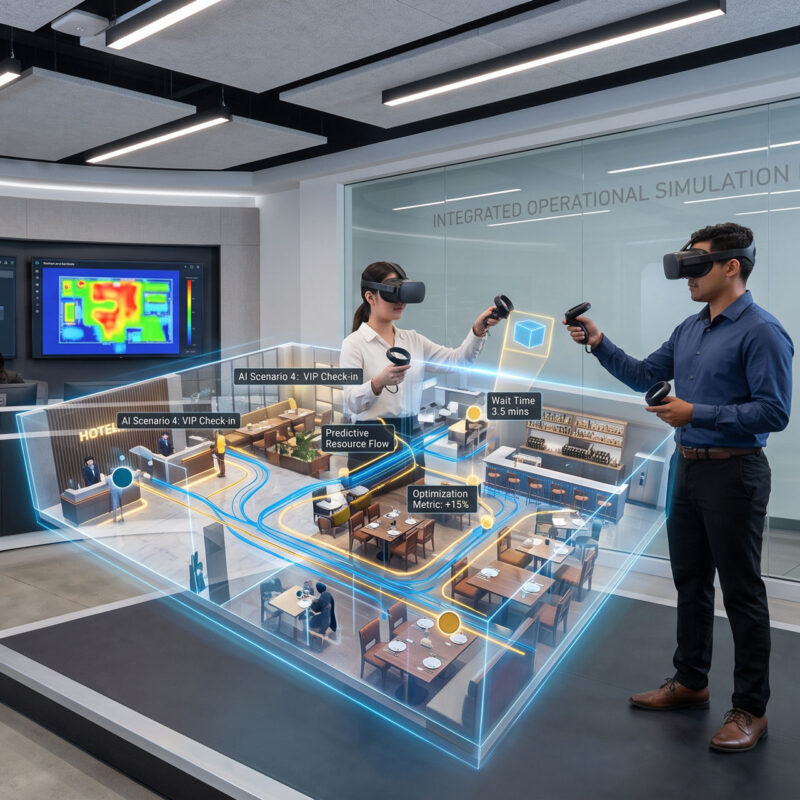
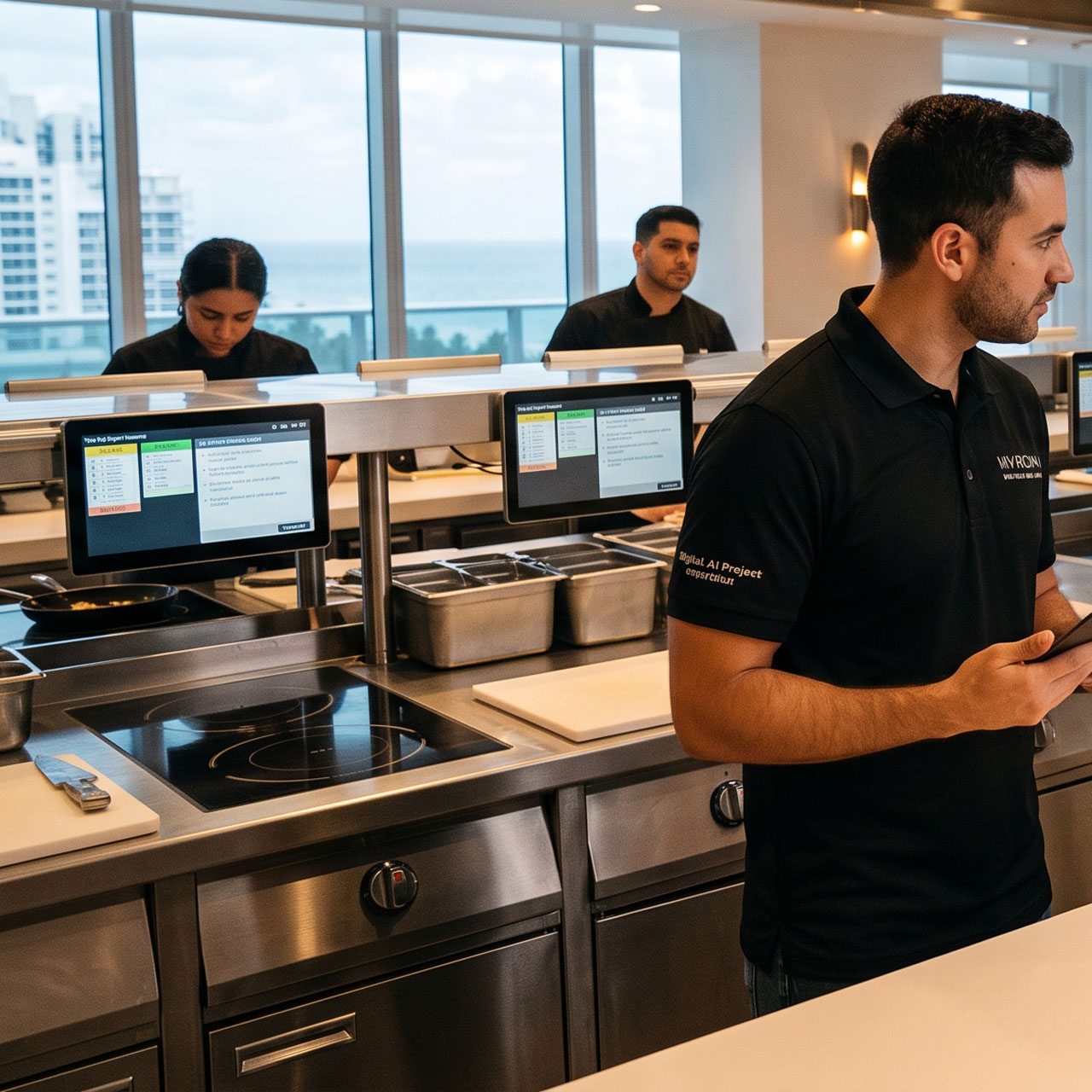
To handle high volume flawlessly, the operational architecture of the kitchen is systematically upgraded. This involves spatial optimization to reduce unnecessary movement (step-tracking) and bottleneck analysis during peak service hours.
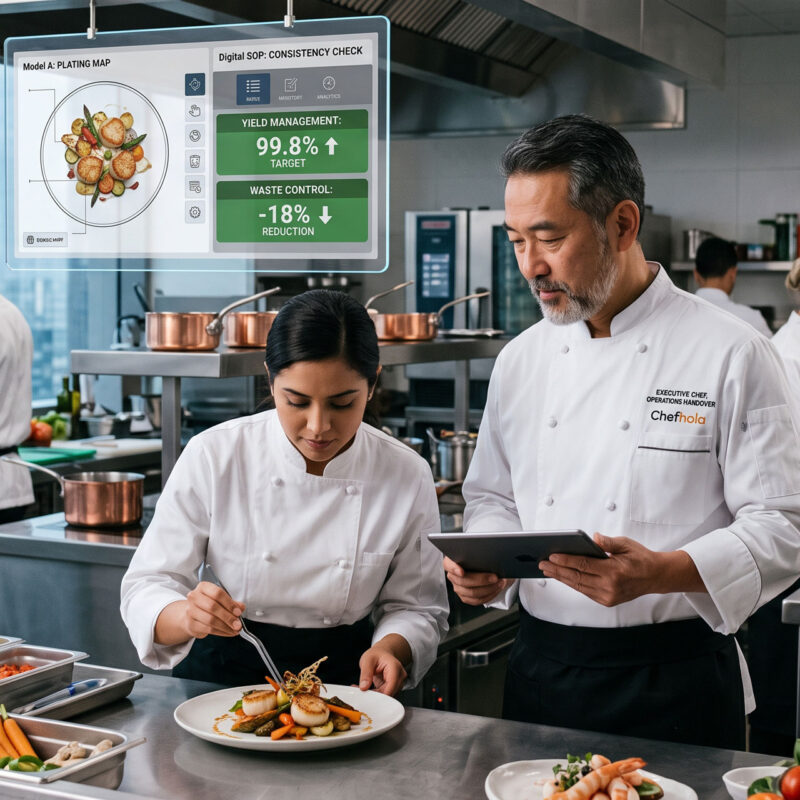
Simultaneously, the menu undergoes Structural Engineering—a discipline pioneered by institutions like the Cornell Center for Hospitality Research. This is a rigorous, data-driven process where every dish is analyzed for two primary metrics:
-
Profitability: Ingredient yield, cost-per-plate, and supply chain volatility.
-
Consistency: Execution complexity, prep-time requirements, and station load-balancing.
Dishes that disrupt the operational flow or yield volatile margins are retooled, ensuring the menu acts as an engine for both revenue and operational stability. The existing culinary team is then upskilled by Digital AI Project experts to execute this optimized matrix, transforming a traditional kitchen brigade into a highly efficient production unit.
The Digital Twin: 3D/PBR Modeling and Cloud SOPs
The most significant vulnerability in Miami Beach hospitality is staff turnover. When veteran chefs leave, institutional knowledge often leaves with them, causing quality to drift. This model mitigates that risk by creating a permanent, immutable Standard Operating Procedure (SOP) hosted in the cloud.
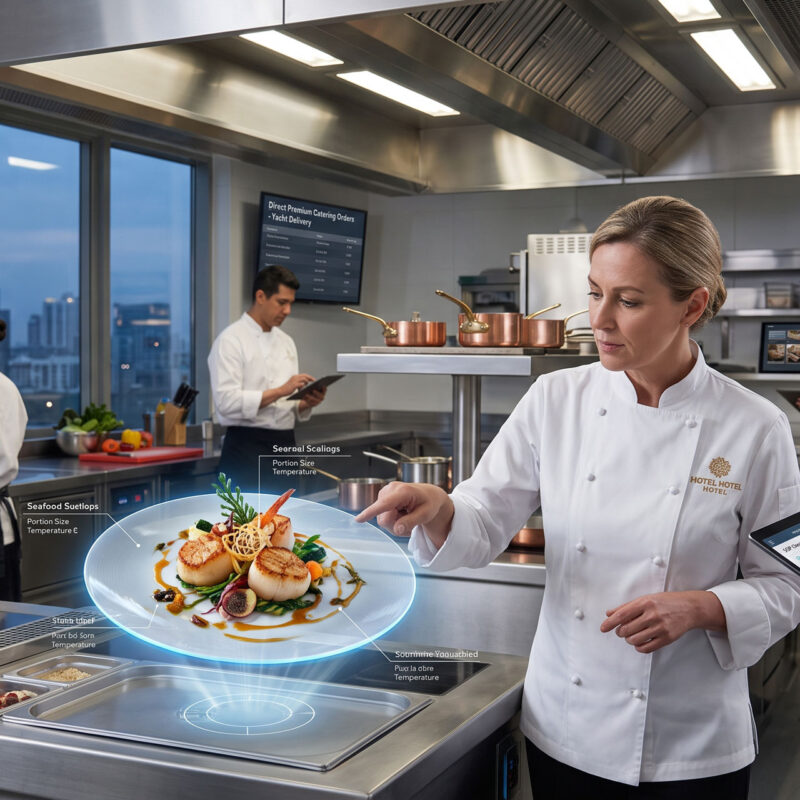
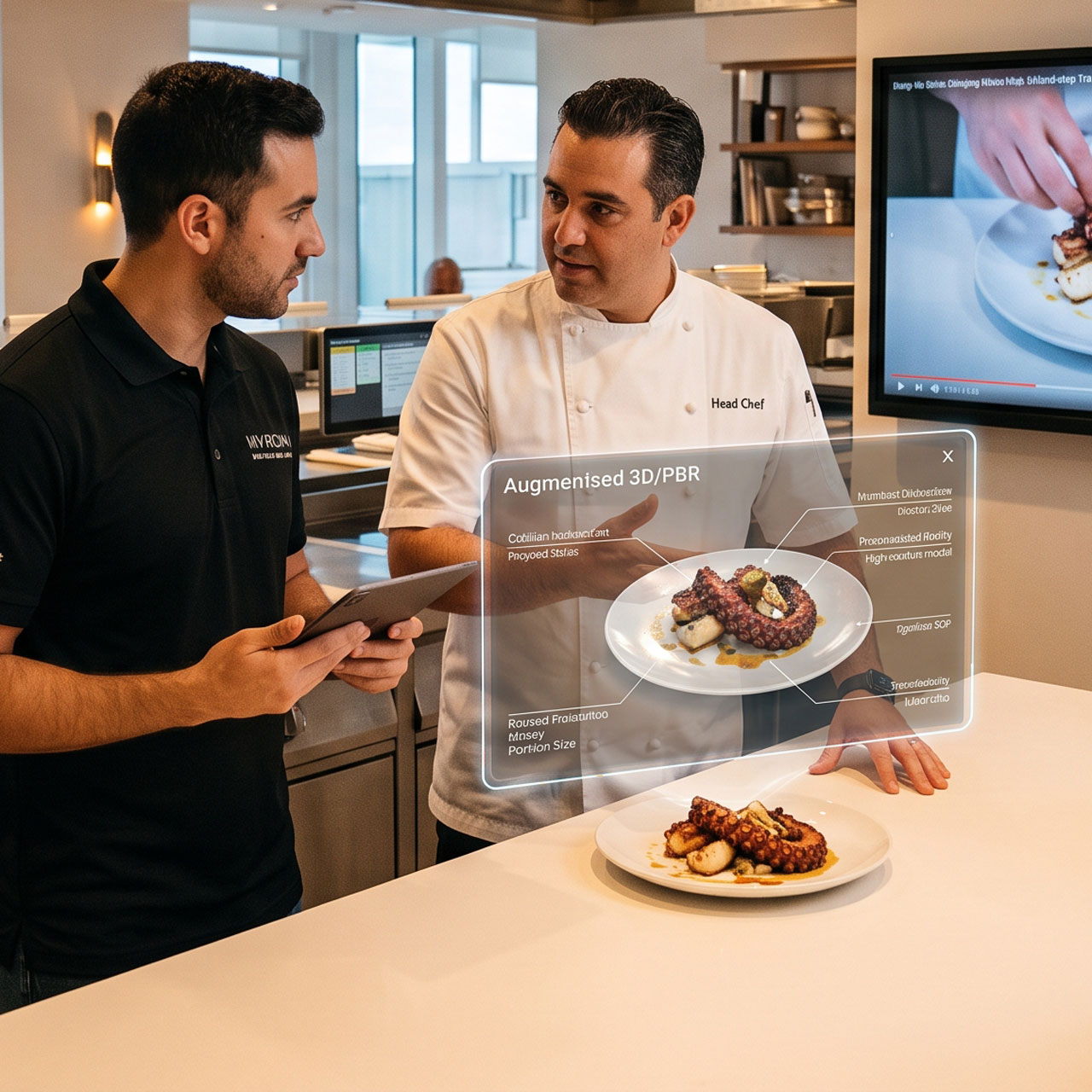
Every dish on the engineered menu is digitized into a high-resolution spatial asset.
-
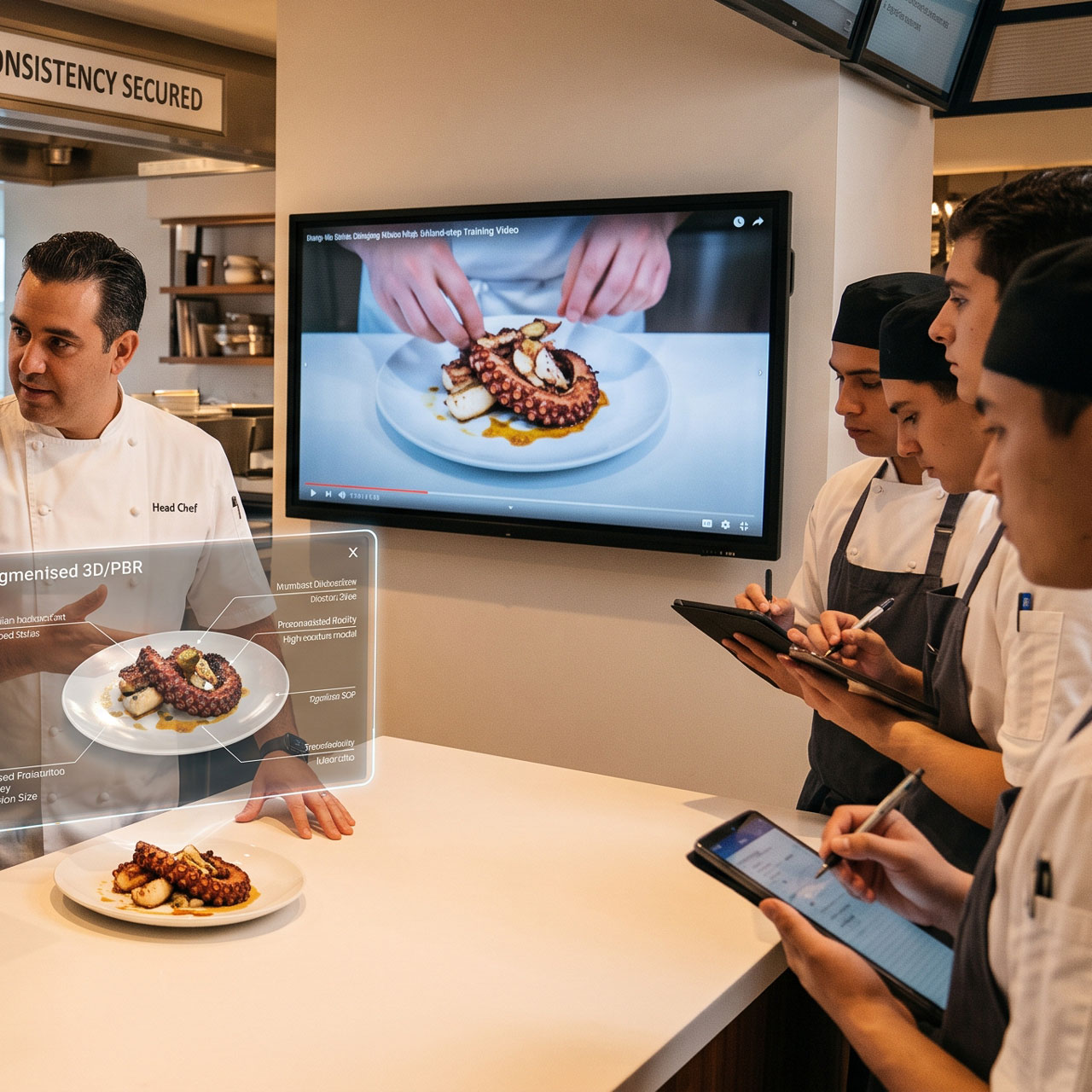
3D/PBR (Physically Based Rendering): Using photogrammetry and advanced rendering techniques, dishes are captured as precise 3D models. As outlined in standard PBR workflows, light reacts to the digital textures exactly as it does in reality—capturing the exact gloss of an olive oil emulsion, the char on grilled seafood, and the precise spatial architecture of the plating.
-
Professional Training Modules: These 3D models are paired with high-definition, step-by-step video executions detailing the exact culinary techniques required.
When new staff is onboarded, they do not rely on subjective, word-of-mouth training. They access the cloud portal, rotate the 3D model of the target dish to understand volume and plating angles, and watch the precise execution flow. The baseline for the “Mykonian” standard is permanently frozen in digital space, ensuring absolute consistency regardless of the current kitchen roster.
Digitizing the Culinary Experience A Technical Blueprint for High Volume Restaurant Optimization 3
Strategic Cost Architecture
Deploying this level of technological integration requires a financial model designed to front-load the heavy lifting while minimizing long-term operational drag.
Fixed Initial Investment
The project operates on a high initial fixed fee. This capitalizes the resource-intensive setup phases:
-
Comprehensive kitchen flow analysis and operational upgrades.
-
Structural menu engineering and profitability mapping.
-
The extensive digital production of all 3D/PBR assets and high-end video training materials.
-
On-site expert training for the baseline culinary team.
Variable Maintenance Retainer
Once the system is deployed, the financial burden drops significantly. A low monthly retainer ensures the system remains agile and up-to-date. This variable cost covers:
-
Seasonal Menu Updates: Digitizing new seasonal dishes, generating their 3D models, and updating the cloud SOP.
-
System Maintenance: Cloud hosting for the 3D assets, software compatibility updates, and maintaining the training portal’s uptime.
By separating the capital expenditure of the digital transformation from the operational expenditure of maintaining it, the restaurant secures a permanent operational upgrade that mathematically insulates it against labor market volatility.
Join the Conversation: #RestaurantTech #MenuEngineering #3DModeling #HospitalityManagement #MiamiBeachDining #CulinaryInnovation #DigitalTransformation #CloudSOP #RestaurantOperations #SpatialComputing