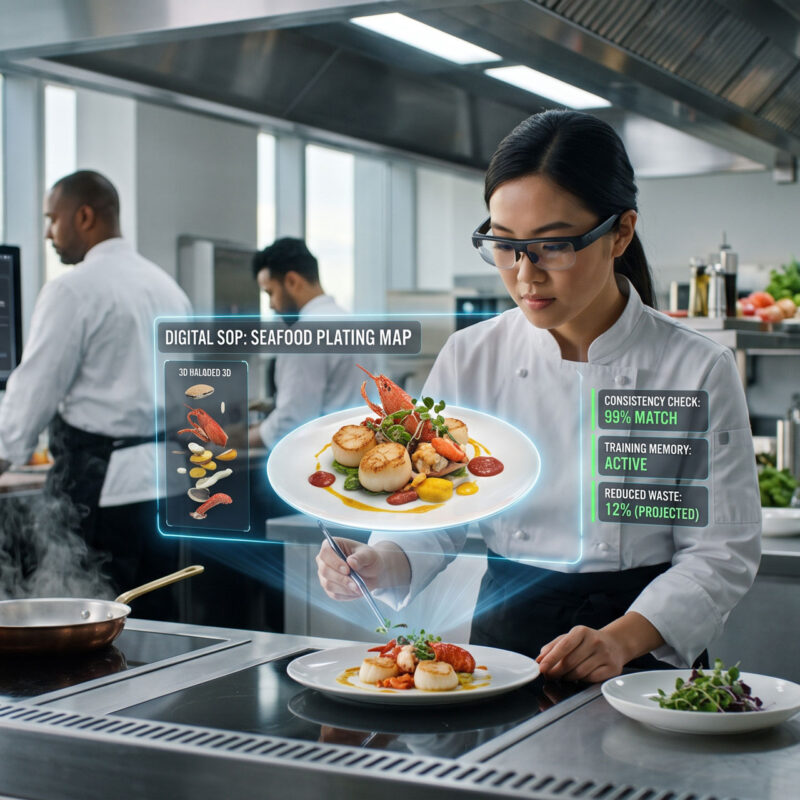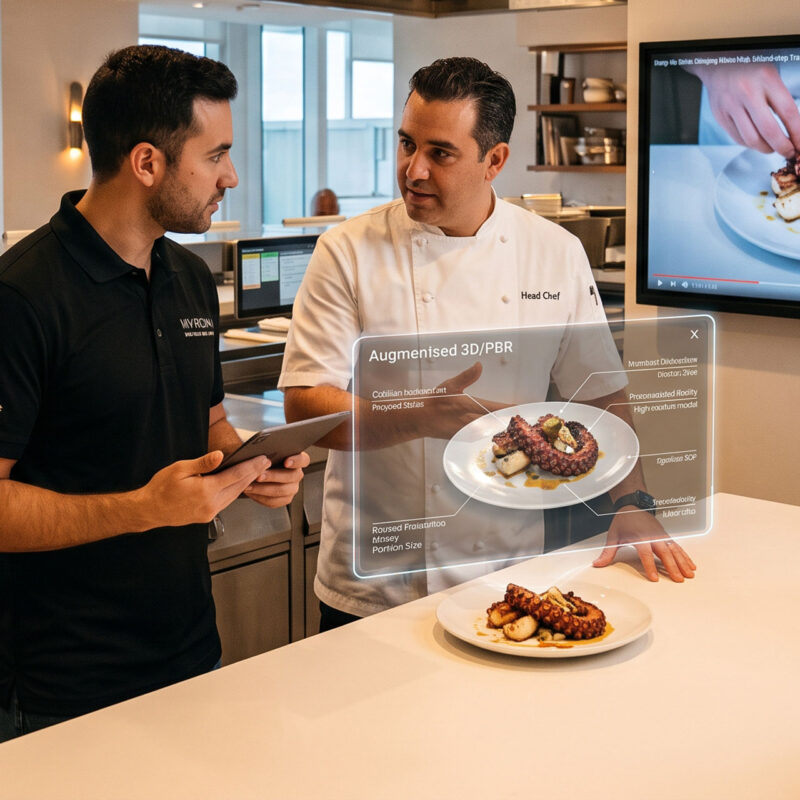
The Digital Paradigm Shift in Hospitality AI 3D Visualization, and Enterprise Training Systems
The Digital Paradigm Shift in Hospitality AI 3D Visualization, and Enterprise Training Systems
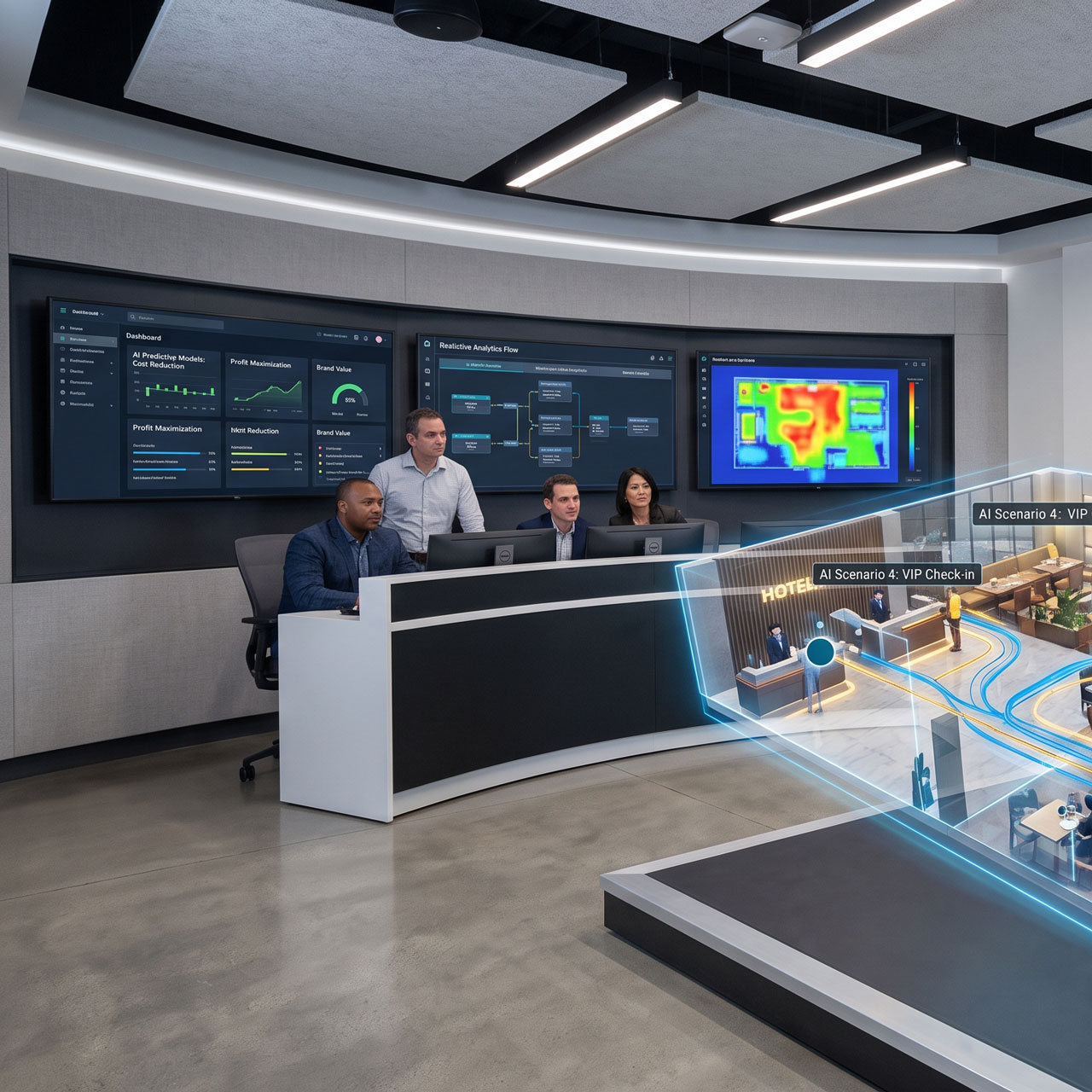
The contemporary hospitality sector—spanning luxury hotel portfolios, multi-level waterfront gastronomy complexes, and global restaurant chains—is undergoing a profound structural transformation. The shift is defined not merely by front-facing guest technology, but by the enterprise-level integration of artificial intelligence (AI), digital twin architecture, and 3D spatial computing within employee training systems.
For developers and operators managing scalable enterprise models, the reliance on traditional, labor-intensive onboarding is a critical bottleneck. By leveraging high-fidelity 3D modeling and AI-driven predictive systems, hospitality groups are aggressively driving down operational costs while maximizing profit margins, service consistency, and overarching brand equity.
The Digital Paradigm Shift in Hospitality AI 3D Visualization, and Enterprise Training Systems 3
Spatial Computing and 3D Digital Twins in Operational Readiness
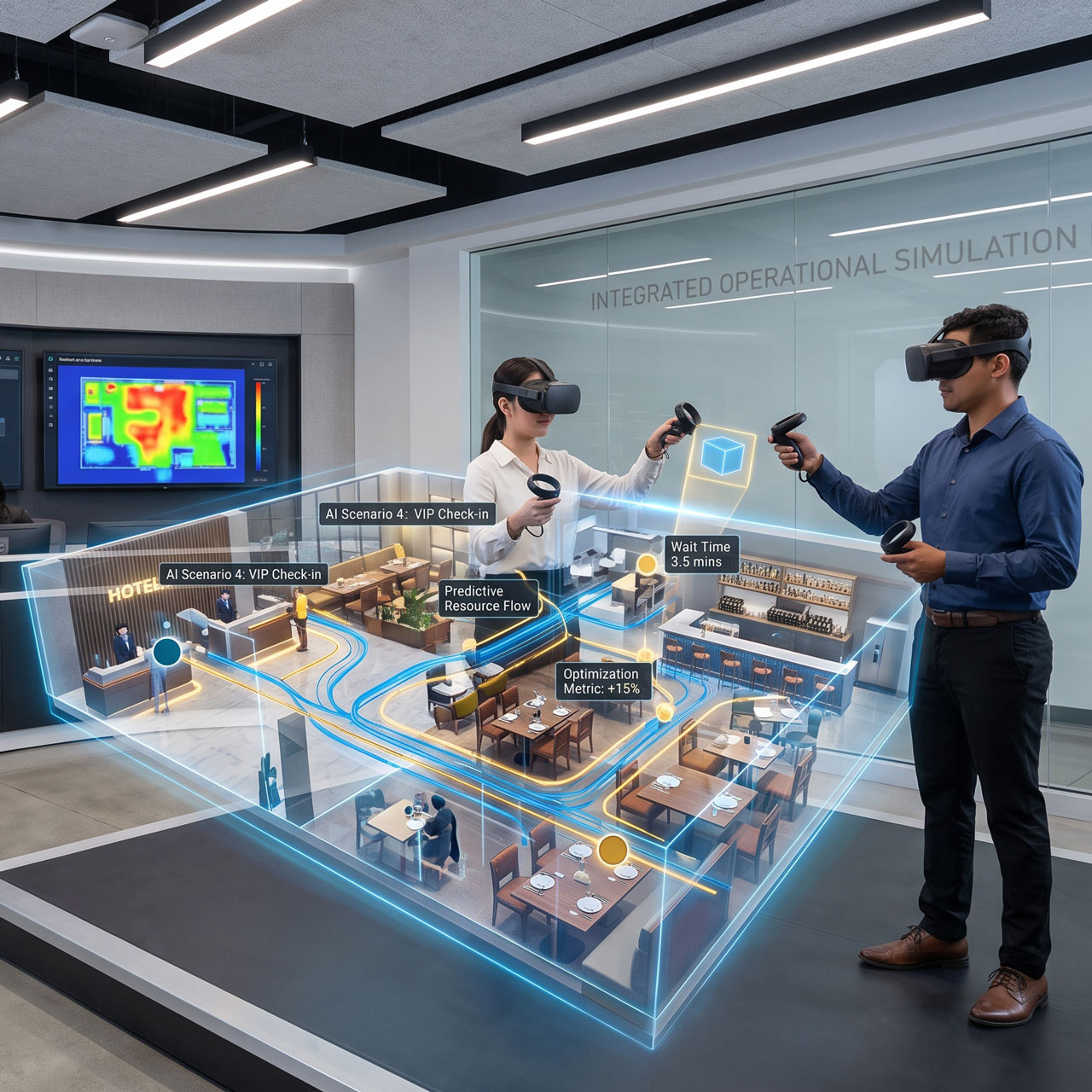
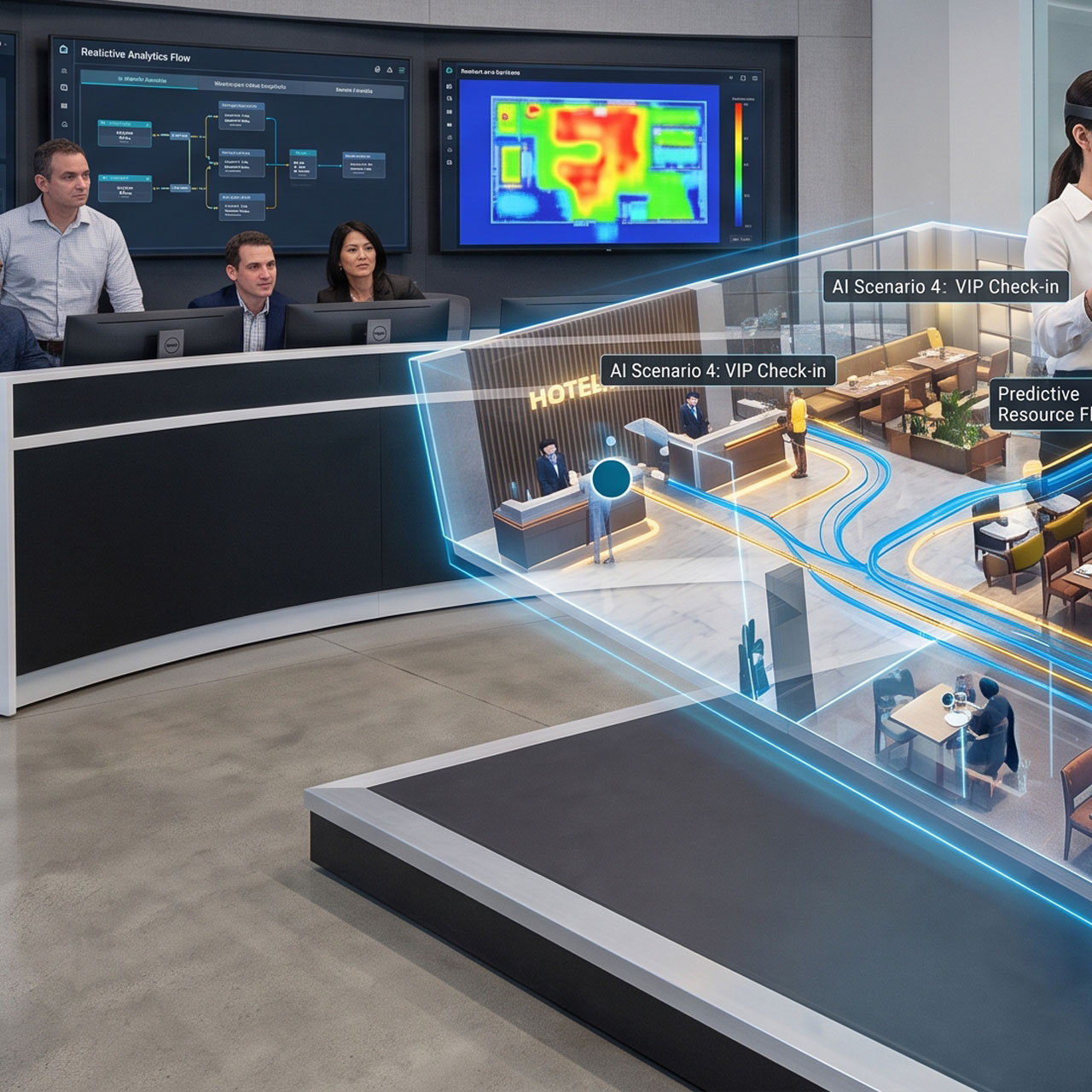
The foundational layer of next-generation training lies in spatial computing and the deployment of digital twins. By utilizing Building Information Modeling (BIM) data and physically-based rendering (PBR) environments, enterprise operators can create millimeter-accurate 3D replicas of hotel lobbies, luxury suites, and complex restaurant seating configurations.
Instead of disrupting live operations for orientation or flying staff to physical mockup locations, employees enter immersive, spatially accurate training modules. This approach allows restaurant staff and hotel operators to navigate complex structural layouts, optimize spatial workflows, and interact with highly detailed digital assets before a physical property even opens its doors.
-
Accelerated Onboarding: Trainees can repeatedly practice spatial navigation, table service routing, and emergency protocols in a zero-risk 3D environment.
-
Cost Abatement: Eliminating the need for dedicated physical training facilities and associated travel expenses drastically lowers the capital expenditure of human resource development. For example, studies have shown that introducing virtual reality into front-desk training can decrease customer complaints by over 70%.
The Digital Paradigm Shift in Hospitality AI 3D Visualization, and Enterprise Training Systems 2
Algorithmic Simulation: AI in Front-of-House Training
While 3D tools provide the physical context, enterprise AI systems deliver dynamic behavioral simulations. Natural language processing (NLP) models and conversational avatars allow staff to engage in high-frequency, complex decision-making scenarios.
-
Dynamic Roleplay: AI avatars can mimic diverse guest profiles, including demanding VIP scenarios, intricate dietary restrictions, or language barriers. This trains staff to react with empathy and precision, building the “muscle memory” required for luxury service standards.
-
Operational Intelligence: AI systems actively track trainee responses, generating predictive analytics on performance. This allows management to identify systemic weaknesses in service protocols and deploy targeted, micro-learning interventions rather than broad, inefficient retraining.
The Financial Calculus: Cost Reduction and Profit Maximization
The financial return on investment (ROI) for digital training infrastructure is highly quantifiable. Traditional training methodologies are inherently difficult to scale; they require proportional increases in human trainers and physical resources. Digital systems decouple training scale from linear cost increases.
-
Optimizing the Labor Efficiency Ratio: By accelerating the speed to proficiency, staff can handle complex multi-table seating arrangements or high-volume check-ins more effectively. A faster, more confident staff directly improves table turnover rates and reduces the friction that limits daily revenue caps.
-
Mitigating High-Friction Errors: In high-end gastronomy and luxury hospitality, service errors degrade brand trust and result in direct financial compensation (comped rooms, refunded meals). Immersive pre-training minimizes these operational liabilities.
-
System-Wide Revenue Impacts: AI tools integrated into operational and revenue management ensure staff are implicitly trained to operate within highly optimized environments. Properties leveraging comprehensive AI operational stacks frequently report operating cost reductions averaging 25% and significant boosts in overall profitability.
Engineering Brand Value and Trust
In a sector defined by subjective human experiences, consistency is the bedrock of trust. Brand value for a global restaurant chain or a multi-property luxury hotel network is deeply tied to the predictability of its service quality.
Advanced 3D training environments ensure that whether a staff member is operating in a corporate headquarters or a coastal resort, the foundational training is standardized, visually precise, and rigorously tested by AI simulations. This technological infrastructure empowers employees with the confidence and competence to deliver exceptional service, thereby shielding the brand from the volatility of localized service failures.
External References & Further Reading
-
The Application of Artificial Intelligence (Virtual Reality and Augmented Reality) as a Training Tool in the Hospitality Industry – ResearchGate
-
AI-First Hotels: Faster to Build, Leaner to Operate, and Richer in Customer Experience – Boston Consulting Group
-
Hotels use virtual reality training for out-of-this-world-results – Heart of the House Hospitality
#HospitalityTech #ArtificialIntelligence #SpatialComputing #DigitalTwins #BIM #LuxuryHospitality #RestaurantManagement #PropTech #FutureOfWork